How to Breathe and Not Breathe While Skydiving
Friday, August 19, 2022
People tend to have a lot of questions before skydiving for the first time, and a common one is about breathing while skydiving. It seems everyone knows someone who knows someone who went skydiving and is adamant they could not breathe in freefall. A more accurate description of their experience is probably that they did not breathe in freefall!
Here we’ll address the common “can you breathe when skydiving” and “how to breathe when skydiving” questions so you can cast your worries to the wind and seize the day!
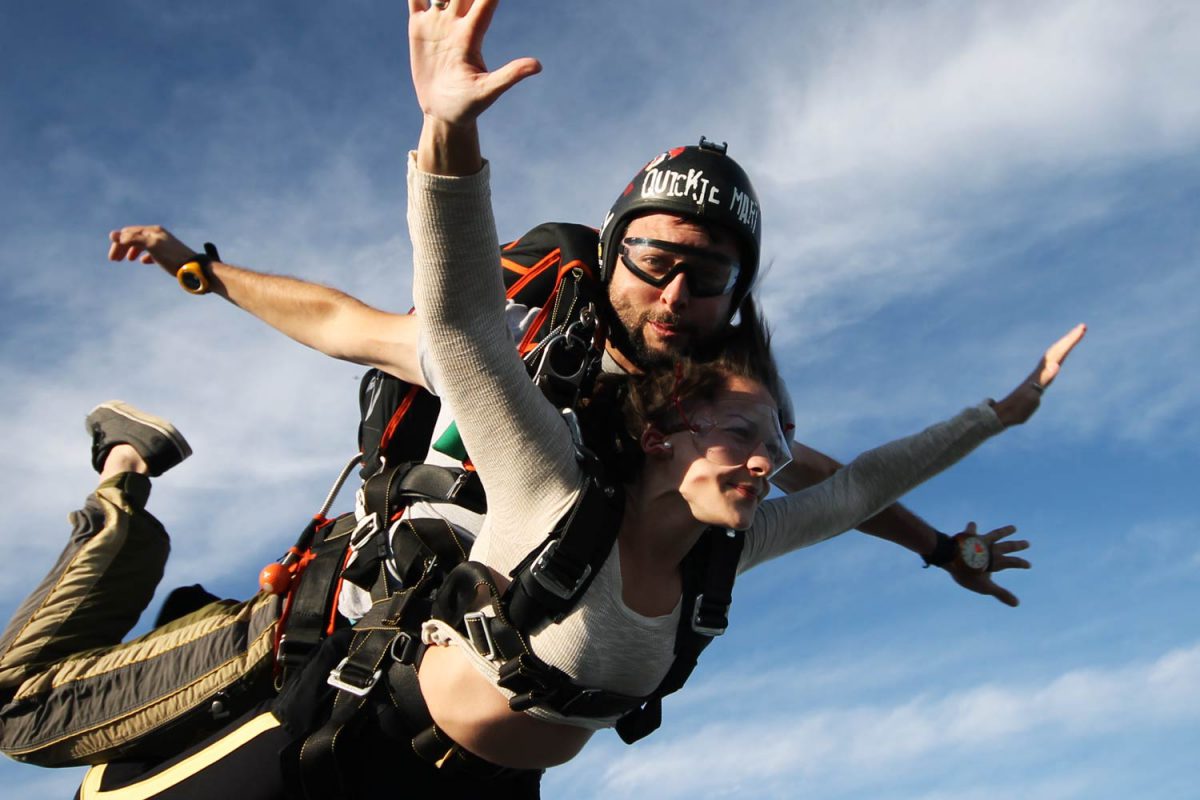
Can You Breathe While Skydiving?
You absolutely can breathe while skydiving! You should be able to take normal breaths in freefall and under the parachute just like you would on the ground. There is plenty of oxygen available to you for the entirety of your jump – in unlimited supply, in fact!
The air does get less dense as the altitude gets higher, but there is still enough oxygen for an average healthy person to breathe normally, even at the 14,000 ft altitude that we typically jump from. As a precautionary measure, the FAA does have rules that pilots need to use oxygen if they go above 14,000 feet, but passengers (like you when you’re riding the plane up to make a skydive) only need supplemental O2 above 15,000 feet. If you’re making the 18,000 ft Premium High Altitude Skydive with us (wooohooo!), then you too will receive oxygen for the plane ride.
Is It Hard to Breathe While Skydiving?
It shouldn’t be hard to breathe while skydiving due to there definitely being enough air to breathe (especially for the short amount of time you’re up there). You’re falling so fast, so you’re really not up in the thinner air for very long.
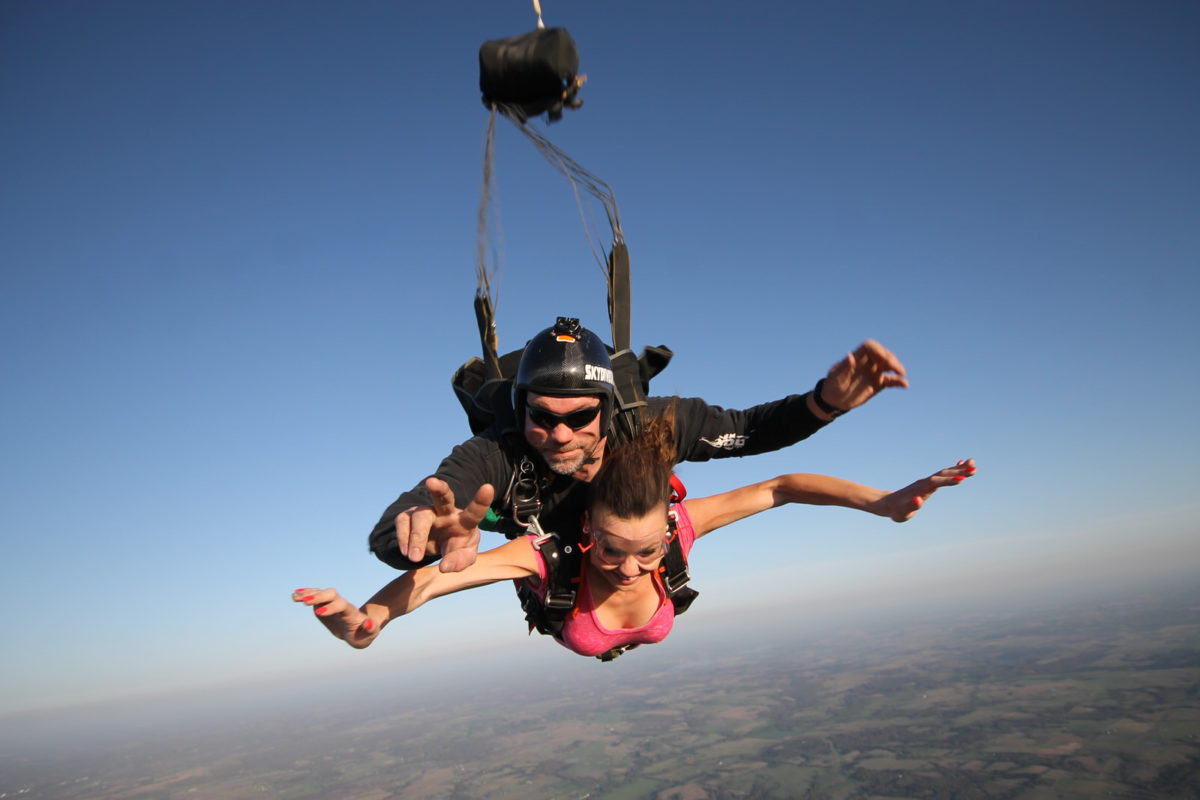
However, some people do say that they’ve had a difficult time breathing on their skydives. This is likely due to their body’s response to anxiety and stress. Most people are fairly nervous and tense before their jump (totally understandable when you’re about to jump out of a plane), so they inadvertently hold their breath or feel a tightness in their chest that prevents them from feeling like they can get enough oxygen into their lungs. These responses are not due to a lack of oxygen, but to nerves.
How to NOT Breathe While Skydiving
Sometimes our body feels like it betrays us when we’re stressed. Do your best to be mindful about how skydiving anxiety affects you:
- Some people subconsciously hold their breath when they’re nervous, but holding your breath will not help you to breathe normally on your skydive!
- Nerves might make you take short, shallow breaths, but this can cause you to hyperventilate. Hyperventilating while skydiving is not at all fun.
How to Breathe While Skydiving?
So, how SHOULD you breathe while skydiving? Well, we touched on this before, but you just breathe normally! If you’re having a difficult time breathing, then there are a few techniques that you can try:
- Practice mindful breathing by focusing on inhaling through your nose and exhaling through your mouth. This should help you to calm down.
- Scream! When you force a large exhale, your body will automatically respond by taking a deep breath in (plus letting loose with a big yell is just really fun!).
- Lift your head up and look at the horizon when you’re in freefall – that way it doesn’t feel like air is being forced into your face.
- Remember that freefall feels like it goes on forever, but it really only lasts about 60 seconds – this can be a comforting reminder if you feel like you can’t breathe.
Can You Skydive If You Have Asthma?
Plenty of skydivers have asthma. We don’t dish out medical advice, though (skydiving advice, yes; medical advice, hard no), so check with your doctor if you have any concerns about breathing or anything else before booking your jump.
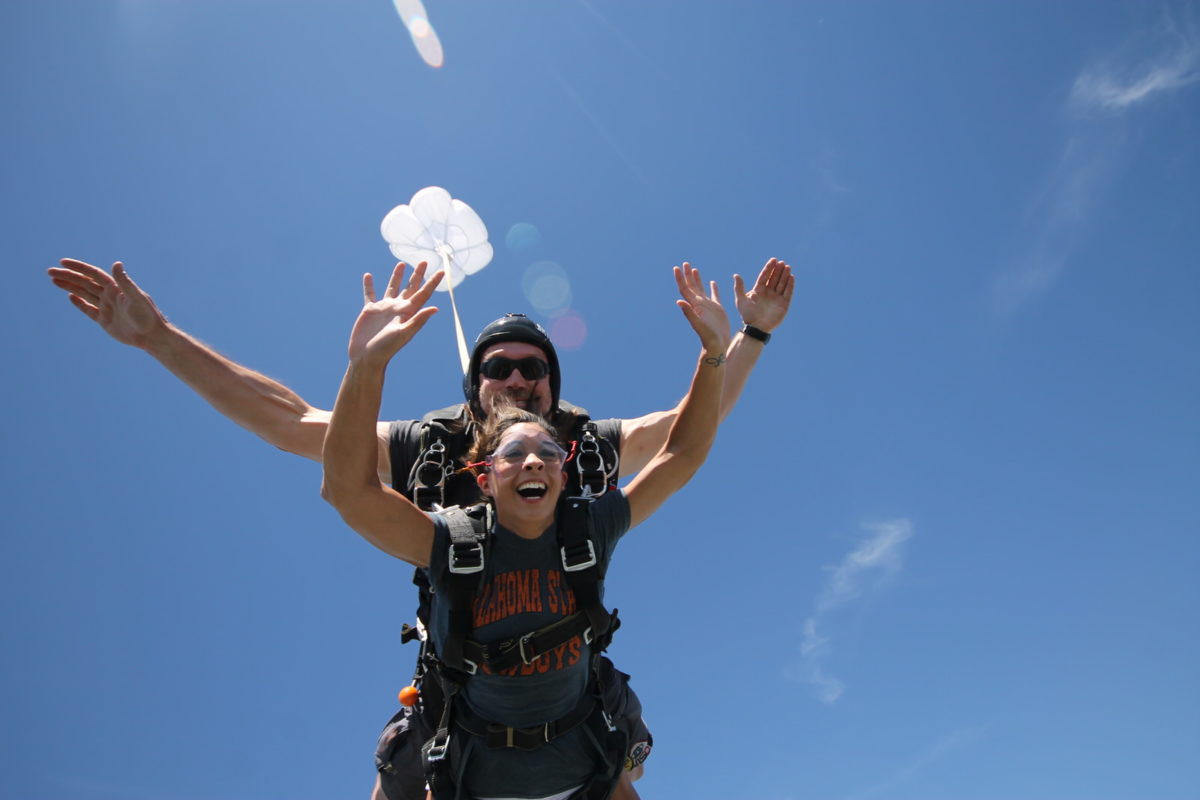
Breathing on a skydive is not complicated, but we all know that sometimes our bodies respond in ways we don’t expect. If you want to talk more about breathing in freefall, or have other questions, give us a shout! We’re here to support you. Blue skies!
Categories:
You May Be Interested In:
-
How Safe is Tandem Skydiving?
4 weeks ago by OklahomaSkydivingCenter
-
Is A Skydiving Proposal A Good Idea?
2 months ago by OklahomaSkydivingCenter
-
How to Calm Your Nerves Before Skydiving
3 months ago by OklahomaSkydivingCenter
-

Skydive Hairstyle: How to Look Good and Feel Great in the Air
4 months ago by OklahomaSkydivingCenter
Contact Info
Skydiving Safety
Each one of our skydiving instructors is thoroughly trained, highly experienced, and safety minded.

Copyright © 2024, Oklahoma Skydiving Center, All Rights Reserved.
DropZone Web Design & Marketing by Beyond Marketing, LLC